What Do Campers Misjudge Most About Solar Panels?

Campers often bring solar panels on trips expecting effortless charging, unlimited energy, or performance that stays constant regardless of terrain or weather. These expectations shape how they pack, how they plan electricity use, and how they evaluate solar gear. Misjudgment usually comes from assuming that sunlight behaves the same everywhere and that solar technology works identically in all environments. A portable model such as the Anker SOLIX PS200 Portable Solar Panel fits naturally into this discussion because it offers angle flexibility, up to 23% conversion efficiency, IP67 waterproof protection, and a foldable design built for real outdoor conditions. Understanding what campers commonly misread helps them get more predictable results.
Where Expectations and Reality Clash for Campers
Many Campers Expect Full Power in Any Lighting
One of the biggest misconceptions happens when campers assume solar panels deliver maximum output whenever daylight is present. They unpack the panel under weak morning sun or mild cloud cover and expect near-instant charging. Solar output always depends on the intensity of the light hitting the surface, and that intensity changes by the hour. Campers who expect consistent power often feel confused when output fluctuates. A panel such as the Anker SOLIX PS200 helps you adapt to these changes because you can set it at 30°, 40°, 50°, or 80° to match the sun’s height throughout the day. By adjusting angles, you capture stronger rays and support steady charging for devices such as lamps or mini fridges. Misjudging light strength leads campers to think the panel underperforms, when the real issue is shifting sunlight.
Some Campers Overestimate How Long They Can Go Without Adjusting
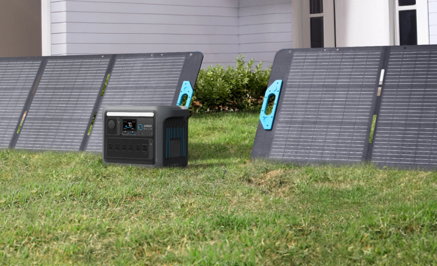
Campers frequently believe they can set a solar panel in the morning and leave it untouched, assuming it maintains good orientation all day. In practice, the sun moves across the sky, and the panel must move with it to achieve strong results. Even a slight misalignment can reduce charging significantly. Many beginners forget this and rely on a “set-and-forget” approach that limits the panel’s potential. The PS200’s adjustable angles make repositioning easier, and its slim unfolded shape allows quick relocation to brighter ground. Campers who track sunlight throughout the day get far better performance because they treat solar as an active tool. The misjudgment appears when campers expect maximum power without making small adjustments that take only seconds.
Weight and Size Can be Misread Before the Trip
Campers often misjudge the weight or footprint of a solar panel before carrying it outdoors. They imagine a compact sheet that weighs almost nothing, only to realize the panel has structure, surface area, and useful accessories such as cables. The Anker SOLIX PS200 remains travel-friendly because it folds into a compact 21.9 × 23.9 × 2 inches and weighs 16.3 lb, but many campers still underestimate how space planning influences packing decisions. This misunderstanding affects how they prepare their backpacks or vehicle layouts. The PS200’s foldable design helps keep packing simple, yet campers benefit most when they understand that a solar panel is an active energy tool, not a passive addition. By planning space intentionally, they ensure easy deployment and stable charging all day long.
Misjudgments That Affect How Solar Works at the Campsite
Terrain and Shadows Often Get Ignored
Another common misjudgment happens when campers underestimate how terrain shapes solar performance. They set up panels near trees or tents, thinking small shadows will not matter, but even partial shading lowers output noticeably. Campers who overlook surrounding features often collect less energy than expected. Placing the panel in open sunlight matters more than many assume. The PS200’s long, unfolded design helps campers reach wider sun patches, and its included extension cables allow flexible placement while keeping devices shaded. This misunderstanding disappears once campers see how dramatically shade alters results. A camping solar pannel becomes far more valuable when users understand how terrain and sunlight work together during a full day outdoors.
Weather Expectations Do Not Match Real Conditions
Campers often expect clear skies throughout their trip, or they assume that light cloud cover does not influence charging. In reality, weather shapes output constantly. Conditions shift between bright sun, thin clouds, and thick shade, and solar panels reflect those shifts instantly. The Anker SOLIX PS200 supports camping across uncertain weather because its IP67 waterproof rating allows it to remain in place during moisture or sudden rainfall. Campers who expect unchanging weather may feel confused when output varies, but solar always reflects real-time atmospheric conditions. The misconception begins when campers expect steady performance rather than responsive performance. Once they recognize this difference, they manage charging windows more strategically and maintain steady access to power.
See also: 5 Ways Businesses Use Custom Greeting Cards for Marketing and Client Engagement
Charging Speed Is Often Misunderstood
Many campers expect solar panels to recharge devices as fast as wall outlets. They pack based on this belief and feel surprised when charging takes longer in certain conditions. Solar output depends on sunlight, orientation, and the performance of the electronics being charged. The PS200, with its monocrystalline cells and efficient sunlight-trapping surface, supports strong charging in good conditions, but campers still need to plan around natural variations. Misjudging charging speed leads to unrealistic expectations about power consumption. Campers who schedule charging during peak sun hours, adjust panel alignment, and use the panel throughout the day get dependable results that match real energy production rather than imagined speed.
Conclusion
Campers misjudge solar panels most often when they expect constant output, minimal effort, perfect weather, or wall-outlet charging speeds. Solar technology performs best when users understand how sunlight, orientation, terrain, and weather shape energy collection throughout the day. A versatile model such as the Anker SOLIX PS200 Portable Solar Panel fits naturally into this learning curve because it adapts to changing light conditions, withstands outdoor environments, and remains easy to position across different campsite layouts. When campers shift from unrealistic expectations to informed practices, they unlock the full potential of portable solar and enjoy more reliable off-grid power during every adventure.