10 Essential Types of Port Equipment Used in Modern Bulk Cargo Handling
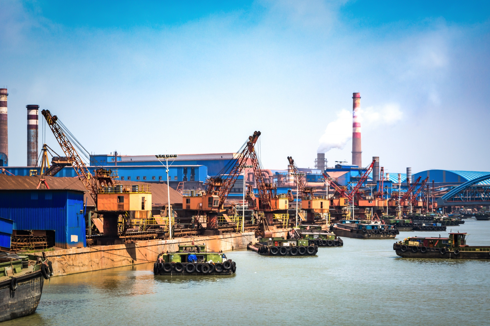
Modern ports handle a lot of cargo daily, making them vital for a nation’s economic development.
For instance, the Newcastle port in Australia handles about 160 million tonnes of cargo annually. Other ports like Brisbane and Gladstone handle 32.34 and 118.33 million tonnes of cargo annually.
The secret to their ability is the various types of port equipment they use. Let’s take a look at the equipment below.
Three Categories of Port Equipment
The port equipment is divided into three categories:
1. Shiploaders
Shiploaders are specialised equipment that are used to transfer coal, ore minerals, or grains from the docks to the ship. They carry out these operations with the help of their components, namely conveyor belts, hoppers, booms, and control systems.
Take a look at the table below for an understanding of the role these parts play:
| Shiploader Component | Role They Play | Impact on Bulk Cargo Handling Operations at Port |
| Conveyor belts | Transfer the bulk cargo from the docks to the ship | Maximizing the speed of conveying the cargo, reducing delays, and enhancing turnover. |
| Hoppers | Hold the materials for a short duration before transferring them to the conveyor belt | Reduce logistical issues like a lack of cargo storage space and personnel |
| Booms | Bridge the gap between the docks and the ship | Allow for efficient transportation of the cargo to the ship without any leaks or spills |
| Control systems | Help the shiploader function without too much manual input or interference | Enhance the efficiency of bulk cargo handling operations |
Table 1: Components of Shiploaders and Roles They Play In Transporting Bulk Cargo
2. Ship-to-Shore Equipment
Ship-to-shore port equipment is used to transfer materials to and from the ship. It refers to three types of cranes which handle bulk cargo handling operations on land, namely:
| Types of Ship-to-Shore Equipment | Role They Play |
| Gantry cranes | Lift and transport containers in terminals and move on rail or track systems |
| Ship-to-Shore cranes | Gantry-like cranes are used to load and unload containers to and from the docks and the ship |
| Mobile Harbor cranes | Used for various bulk cargo handling operations due to their versatility and mobility |
Table 2: Types of Ship-to-Shore Equipment for Bulk-Cargo Handling
Each of these cranes improves bulk cargo loading operations and unloading speed, and increases the capacity of the port to handle more ships.
See also: 5 Ways Businesses Use Custom Greeting Cards for Marketing and Client Engagement
3. Container-handling Equipment
Container handling port equipment is used to improve the speed and efficiency of bulk cargo handling operations. This equipment ensures that the cargo containers are handled safely and transported to the ship.
Some examples of container handling equipment include:
- Rubber-tyred gantry cranes
- Rail-mounted gantry cranes
- Straddle Carriers
- Reach Stackers
- Container Side Loaders
- Automated Guided Vehicles
Let’s explore their roles below.
| Types of Equipment | What They Are | Role They Play in Handling Bulk Cargo Handling | Impact on Bulk Cargo Handling Operations at Port |
| Rubber-tyred gantry cranes | It is a gantry crane mounted on rubber tyres | transport bulk cargo efficiently due to their mobility | Increase the efficiency and capacity of the port to handle bulk cargo loads and reduce holdups |
| Rail-mounted gantry cranes | It is a gantry crane that is mounted on a rail system | transport bulk cargo efficiently with the help of electric-powered rail systems | Increase the efficiency and capacity of the port to handle bulk cargo loads and reduce holdups |
| Straddle Carriers | Freight handling vehicles designed for heavy cargo | Transport cargo by balancing it between their elevated cab and moving sideways to deliver the load to the required area | Reduce logistical issues by: i) optimizing space ii) over-reliance on multiple port equipment due to their capacity to lift, transport, load, and unload cargo |
| Reach Stackers | Mobile front-loading crane | Use their booms (“arms”) to lift and stack different types of cargo | Reduce space issues due to their i) load-handling capacity ii) improve operational turnover since they can handle different types of bulk cargo |
| Container Side Loaders | Also known as side forklifts, and is a truck with hydraulic arms mounted on its sides | Used to load cargo onto freight trucks for efficient transport to other destinations | Reduce loading and unloading times and streamline bulk cargo handling operations |
| Automated Guided Vehicles (AGVs) | Remote vehicles powered by software, batteries, or electricity | Are able to transport up to two TEUs or 20-foot cargo container equivalent | Solve logistical issues associated with the lack of personnel |
Table 3: Types of Container-handling Equipment Used for Bulk Cargo Handling
Wrapping Up
The advances in technology mean that the type of port equipment used to handle bulk cargo will continue evolving. One trend that’s expected to dominate is automation. You can expect advances like smart forklifts, automated yard trucks, and smarter Automated Guided Vehicles.
The Automated Guided Vehicles will undergo AI enhancements due to machine learning and deep learning. With the help of this framework, they will be able to adapt to the environment and on-port traffic.
So, you can expect reduced delays in bulk cargo handling and optimized efficiency.
Ready to Enhance the Efficiency of Your Port Handling Operations?
Get in touch with a reputed company that deals in port equipment near you in Australia and optimize your port handling operations today! Don’t forget to explore their other offerings, which can augment the equipment.