
6 Important Features to Look for in a HIFU Research Ultrasound System
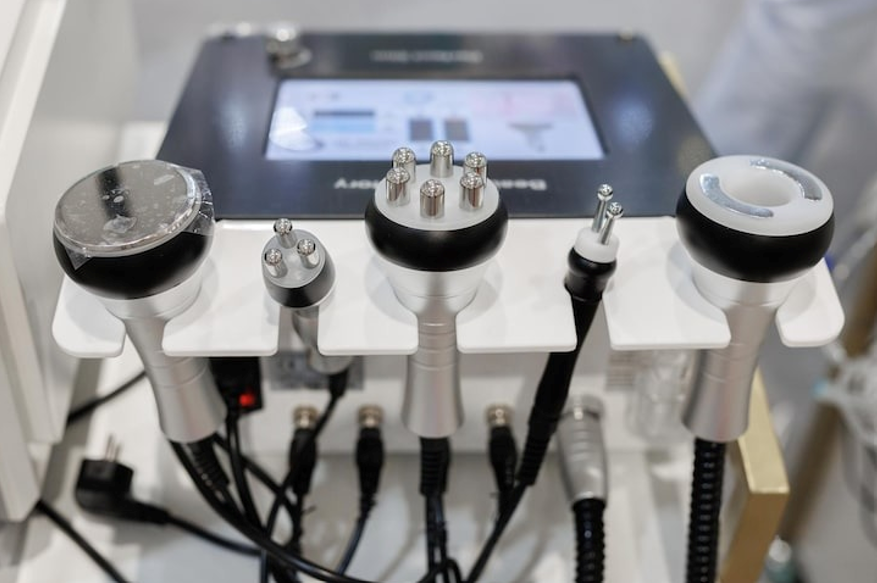
A High-Intensity Focused Ultrasound (HIFU) research system is an advanced ultrasound platform that is extensively used by scientists and engineers. From ultrasound capability to transducer flexibility, you have to check different features.
Key Takeaways
From oncology to blood-brain barrier disruption, HIFU has brought a revolution in therapeutic ultrasound research. With enhanced precision and minimal invasion, HIFU has become a safe and highly effective treatment against tumors, other than just being an imaging tool. Therefore, when you seek a research-grade HIFU system, you need to consider beyond imaging capabilities.
This article lists the important features that are to be considered in an HIFU research system.
What are the Top 6 Features to Check in a HIFU Research System?
The top six features are:
1. Open Architecture and Software Programmability
A key feature of an HIFU research ultrasound system is open architecture and software programmability. This is effective for the researchers as it helps to avoid the rigid controls of clinical scanners. This is significant because of the modification of beamforming algorithms, raw data access, and pulse sequences.
These platforms enable acoustic simulations and excellent heating protocols by offering access to raw channel data and tailored transmit waveforms. While considering this feature, ensure full access to pre-beamformed RF information. Also, the system must be integrated with Python, C++, or MATLAB APIs.
2. Dual-Mode Ultrasound Capability
A HIFU system must possess a dual-mode ultrasound capability. In this case, a transducer easily switches between high-intensity therapy and pulsed diagnostic imaging. This feature eliminates the need for separate co-registration devices, enabling real-time targeting, real-time treatment planning, and continuous focal point targeting.
While choosing a HIFU research system, you must check for interleaved imaging and therapy sequences. The considered one must possess high-frame-rate tracking. This monitors tissue displacement or cavitation during the HIFU push.
3. High Channel Count and Transducer Flexibility
HIFU research systems ensure transducer flexibility, thereby enabling continuous diagnostic imaging and targeted deep-tissue thermal ablation. High-channel-count architectures are essential because they provide the needed independent phase and amplitude control to drive multi-element HIFU arrays. A good consideration here is the Row-Column Array transducer.
All you need to ensure is support for high channel counts like 128, 256, or more independent channels for both transmit and receive. Also, your preferred system must be compatible with different types of transducer geometries like linear, concave, or matrix arrays.
4. Advanced Synchronization and External Triggering
Researchers prefer a seamless coordination between high-power therapeutic energy and real-time ultrasound imaging. This makes them check whether a chosen system has advanced synchronization and external triggering. This acts as a barrier for intense therapeutic pulses to blind the imaging sequence.
External hardware, like MRI scanners, physical monitors, or 3D positioning stages, is often integrated into HIFU labs. This indicates the need for advanced synchronization. Your considered system must have low-jitter hardware triggers. Check whether it has the clock synchronization capability that aligns ultrasound pulses with external data acquisition systems.
5. High-Power Output and Long Duty Cycle Capability
There is a need for specialized hardware ensuring continuous energy delivery (over 1000 W+) without transducer overheating to ensure high-power output and extended duty cycles in HIFU systems. A standard diagnostic ultrasound engine fails to handle the long pulse durations required to generate thermal ablation. This is where a HIFU research ultrasound system is different.
Here is a data table to further guide the understanding of this feature:
| Parameter | Standard Diagnostic System | Specialized HIFU Research System |
| Typical Pulse Duration | Microseconds (μs) | Milliseconds (ms) to Continuous Wave (CW) |
| Primary Bioeffect | Minimal; localized acoustic backscatter | Controlled thermal ablation / Cavitation |
| Amplifier Design | Low-power, high-bandwidth imaging pulsers | High-power, thermally managed source tracking |
| Duty Cycle Limits | Typically restricted to less than 1-2% | Extended duty cycles up to continuous execution |
Table: Data Table for HIFU vs. Standard Systems
While looking for a system, you need to evaluate having specialized power amplifiers that can bear high acoustic energy output. Also, there should be robust thermal management in both the engine and the transducers. These combat overheating when duty cycles are extended.
6. Robust Safety Interlocks and Hardware Protection
Safety locking systems and hardware protections prevent tissue damage, acoustic overexposure, and equipment failure. This feature is a must in a HIFU research system, as expensive transducers can be damaged by high-power ultrasound. This marks the need for an effective interlocking system.
To ensure robust safety interlocks, you need to consider that your selected system has programmable voltage. In addition, there must be transducer temperature monitoring and automatic shut-off triggers. Also, there should be an emergency stop (E-stop) hardware integration.
Wrapping Up
The main features to prioritize in a HIFU research system are open architecture and software programmability, dual-mode ultrasound capability, high-power output, and long duty cycle capability, etc. You need to consider an advanced solutions provider to obtain a top-quality system.
See also: Wearable Technology: How It’s Improving Health and Fitness
Advancing Your HIFU and Therapeutic Ultrasound Research
Find a renowned research equipment company in the USA. Visit their site to check their offerings and excellence. Collaborate with them and obtain your desired HIFU research system.